
England End Norway's World Cup 2026 Run: How Bellingham Shut the Door on Haaland
A disciplined England defence and a two-goal performance from Jude Bellingham sent Norway out in extra time — and ended Haaland's scoring streak at more than 600 days.
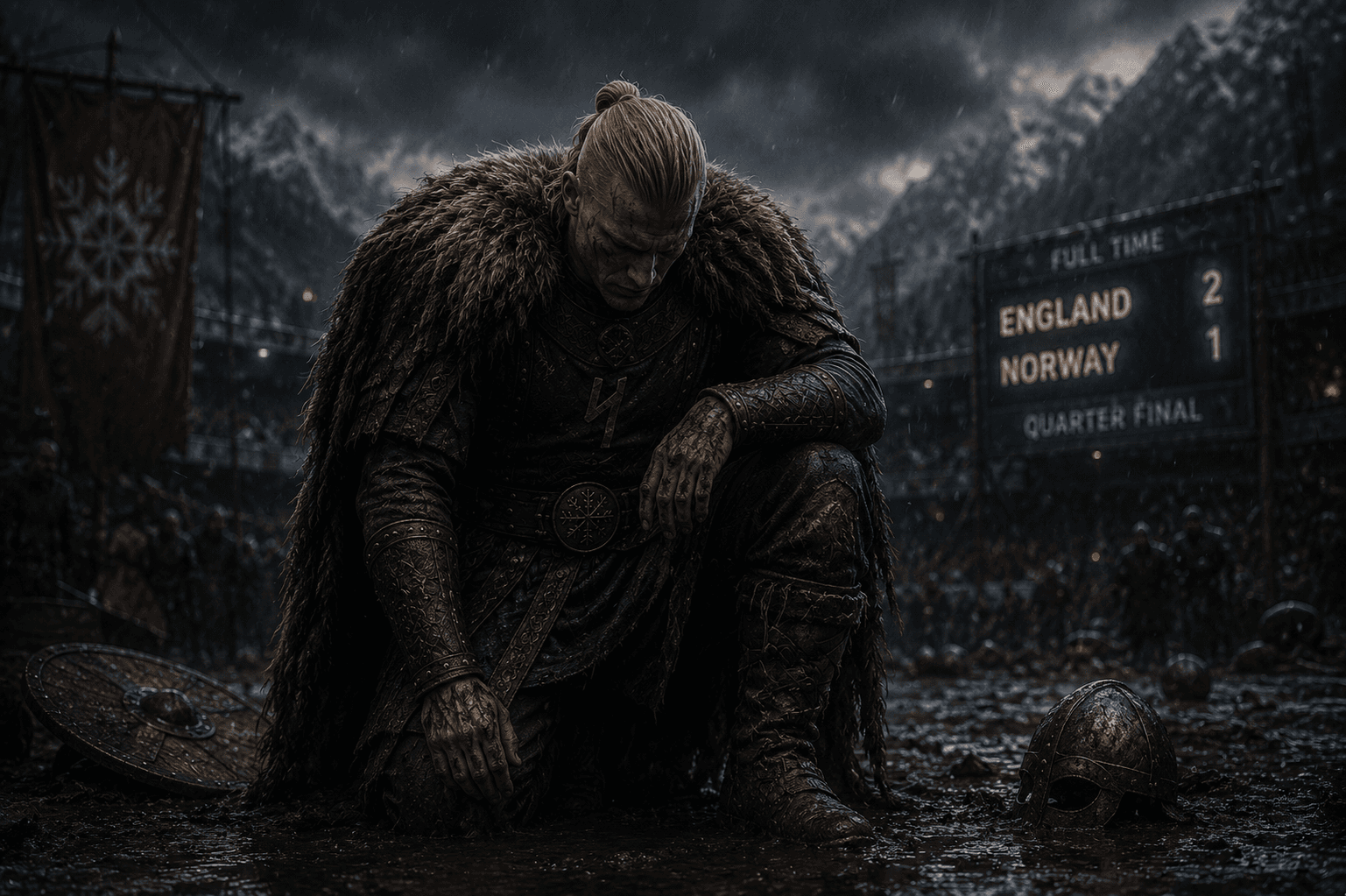
Norway's World Cup 2026 run ended in extra time, 2-1 to England, in a quarter-final that turned less on Erling Haaland's finishing and more on how well England kept the ball away from him in the first place. The result answers the question this site raised two days ago about that high defensive line — but it was the other end of the pitch that decided the match.
A Plan, Not a Slump
England's centre-backs, Marc Guéhi chief among them, were disciplined all night. Haaland was denied space in behind, the passing lanes Martin Ødegaard usually threads through were shut off early, and the touches Haaland did get rarely came in central, dangerous positions. He never really had a golden chance — not because the movement wasn't there, but because England made sure the ball never arrived at the right moment.
He didn't lose the game. England made sure he was never in position to win it.
Too Few Touches, Too Little Service
Elite strikers live on service, and Norway couldn't supply enough of it. England controlled the midfield for long spells, Ødegaard's trademark through balls had nowhere to go, and Norway leaned on counter-attacks rather than sustained possession. Whenever Haaland did get the ball, he was pushed wide, forced to play with his back to goal, or closed down by two defenders before he could turn — exactly the one-on-one situations he lives for, taken away one by one.
The Goal That Got Away
Norway had a goal ruled out for a foul in the build-up, and the moment mattered more than the scoreline suggests — instead of extending an advantage, Norway lost their grip on the game, and England grew into it. Andreas Schjelderup's opener had given the press-and-strike plan an early platform to work from; the disallowed goal was the moment that platform started to wobble.
Bellingham's Afternoon
Jude Bellingham won the game in the areas Norway couldn't cover. He equalised just before half-time with a finish few midfielders in the tournament could match, then scored again early in extra time to complete the turnaround — controlling transitions and arriving late into the box all afternoon while Harry Kane had one of his quietest games of the tournament. Norway's defensive line held up well enough to keep Haaland's opposite number anonymous; it was the opposition's midfielder who made the difference instead.
England became the first side to keep Haaland scoreless in a competitive international for more than 600 days. That statistic says more about the plan than the player — he worked the channels, occupied two defenders most of the night, and stayed a threat every time Norway broke forward. There just wasn't enough service behind him to turn that threat into a chance.
Norway's exit was a collective issue, not an individual one. England's shape neutralised the run that has beaten every other back line at this tournament, Norway couldn't generate enough clean looks to test it a second way, and Bellingham decided the game in the moments that mattered. The high line this site flagged before the round of 16 held up fine — it was the final ball into Haaland that never arrived.